

Pineapple for implantation. Supplements for “egg quality.” A perfect diet before you are allowed to try.
When pregnancy is the goal, ordinary meals can start to feel like a test you must pass.
Nutrition matters. But supporting reproductive health, preparing for pregnancy, and increasing the chance of conception are different outcomes. The science does not support treating them as interchangeable.
Is there a proven fertility diet?
A 2023 systematic scoping review examined 36 observational studies of preconception diet and female fertility. Mediterranean-style eating showed the most consistent association with improved clinical pregnancy rates. However, the authors found insufficient evidence to recommend a specific dietary approach for improving fertility.
These studies identify associations, not proof of cause. Participants may also differ in age, smoking, medical history, or other factors.
Findings from fertility-treatment patients may not apply to natural conception. A positive test, clinical pregnancy, and live birth are also different outcomes.
The practical message: a nutritious dietary pattern is a sensible foundation, but it should not be sold as a fertility treatment.
Folic acid: a clear reason to start early
One recommendation has a much firmer foundation.
Canadian guidance recommends a daily multivitamin containing 400 micrograms (0.4 mg) of folic acid for anyone who could become pregnant. Ideally, start at least three months before pregnancy. If you have not started, begin as soon as possible.
Why before a positive test? The neural tube, which develops into the brain and spinal cord, forms very early—often before someone knows they are pregnant. Folic acid helps reduce the risk of neural tube defects.
This is about preventing birth defects, not a promise that you will conceive faster.
Some people need a different dose because of their medical history or medications. Discuss that with a clinician rather than increasing the dose yourself.
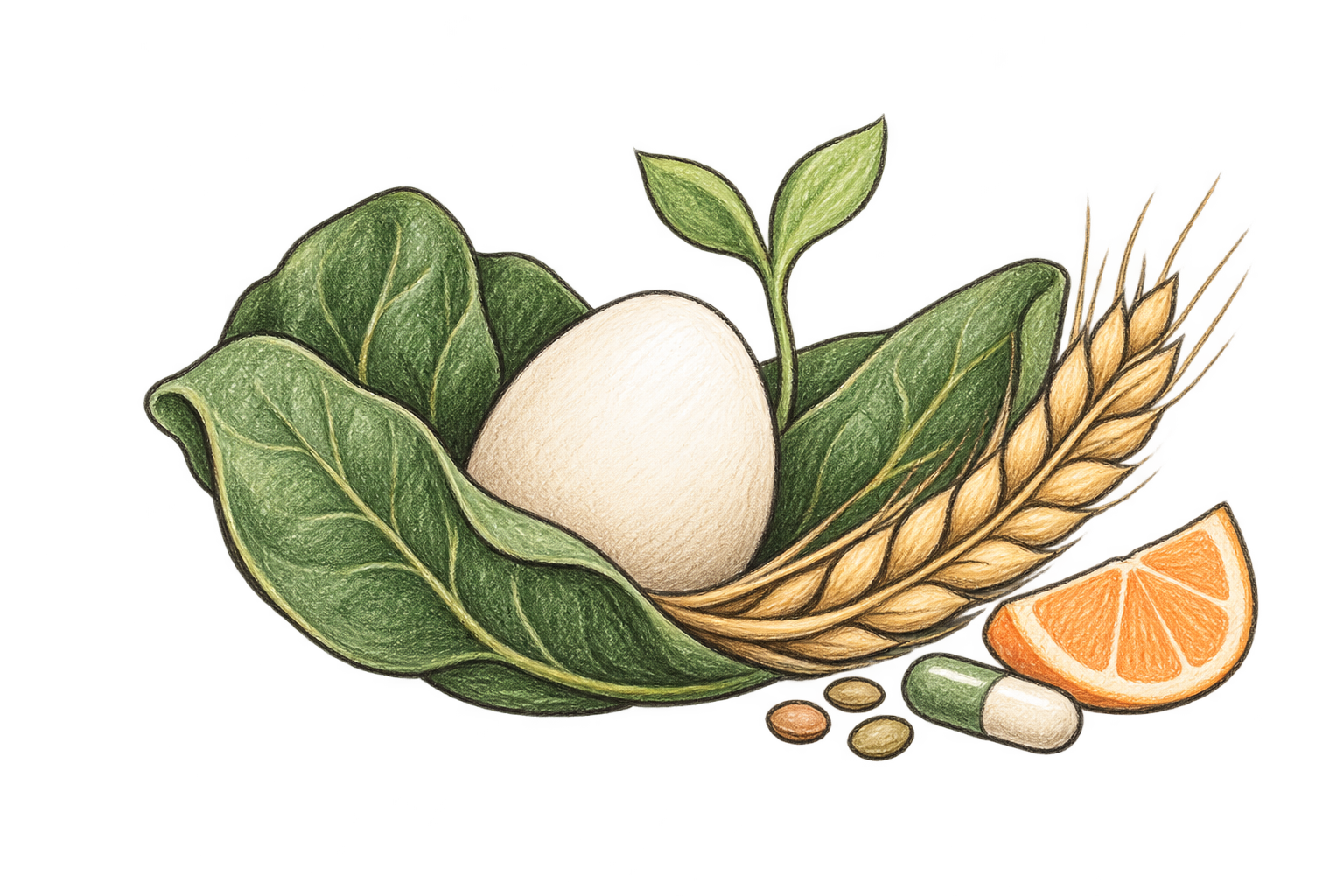
Leafy vegetables, lentils, beans, and oranges contribute folate, but food does not replace the recommended folic acid supplement.
Build adequacy before adding extras
Preconception nutrition starts with meeting your needs—not collecting products labelled “fertility.”
A varied pattern can include vegetables, fruit, whole grains, legumes, nuts, and protein foods such as tofu, eggs, fish, or poultry. Familiar foods and cultural preferences can fit.
For practical examples, revisit Bridging East and West: Adapting Canada’s Food Guide for Chinese Cuisine.
A preconception visit can also review whether your diet provides enough iron, vitamin B12, vitamin D, calcium, and other nutrients. Supplement choices should reflect your needs.
Correcting a deficiency supports health. It does not mean taking more of a nutrient will keep improving fertility once your needs are met.
Can food improve “egg quality”?
The phrase is widely used in marketing, but a healthier blood test or laboratory marker is not the same as a higher chance of having a baby.
There is no established food or supplement regimen that reverses age-related fertility decline or guarantees pregnancy. Evidence for antioxidants and herbal remedies remains insufficient to support broad promises about improving natural fertility.
Ask: what was measured, in whom, and did it improve pregnancy or live-birth outcomes?
If you are receiving fertility treatment, check supplements with your clinic. A product marketed as natural still belongs in your medication review.
Does losing weight always improve fertility?
No. The outcome depends on the person and the clinical situation.
In the FIT-PLESE randomized trial, 379 women with obesity and unexplained infertility were assigned to preconception programs, followed by standardized fertility treatment. An intensive 16-week weight-loss program did not significantly improve healthy live-birth rates compared with an activity-focused program without targeted weight loss.
The intensive program combined dietary changes, activity, and weight-loss medication. Its findings do not apply to every cause of infertility.
As we discussed in Part 2, managing PCOS-related ovulation difficulties is a different clinical situation. A plan should consider your diagnosis, age, health, and treatment goals.
Do not postpone care while perfecting your diet
Fertility depends on more than nutrition, and evaluation may involve both partners.
For people trying through regular unprotected intercourse, assessment is generally recommended after:
12 months if the woman is under 35.
6 months if she is 35 or older.
Earlier with irregular or absent periods, known fertility concerns, or age over 40.
You do not need to spend those months trying every supplement first.
Good preconception nutrition is preparation, not a guarantee—and difficulty conceiving is not proof that you ate badly.
Coming up next
We’ve explored how to prepare nutritionally before pregnancy. Next, we’re looking at what changes once pregnancy begins.
In Part 4 of our Women’s Nutrition & Hormonal Health Across the Lifespan Series, we’re turning our attention to pregnancy nutrition.
Pregnancy Nutrition: More Than “Eating for Two”
We’ll look at changing nutrient and energy needs, prenatal supplements, food safety, and practical meals—without making every bite feel like another rule to follow.
See you in Part 4!
If this post was useful to you, share it with someone who might benefit, and follow our WeChat page or Substack for more evidence-based nutrition made accessible to everyone.