

Last time, we talked about diabetes and metabolic syndrome as the uninvited guests crashing your health party. But here’s a plot twist: the bouncer who’s supposed to keep things under control—insulin—might actually be working against you when levels stay too high for too long.
Today, we’re looking at insulin from a different angle—not just what happens when it stops working, but what happens when there’s TOO MUCH of it. Because sometimes, the hero becomes the problem.
The Dark Side: When High Insulin Backfires
Here’s something most people don’t know: high insulin levels (hyperinsulinemia) can exist for YEARS before blood sugar ever goes up. Your standard blood tests might look perfectly normal while insulin is quietly causing damage behind the scenes.
What does chronically high insulin actually do?
• Tells your body to STORE fat (and makes it nearly impossible to burn it)
• Increases hunger and cravings — ever notice you’re hungrier after eating sugary foods?
• Drives inflammation throughout the body
• May contribute to certain cancers — research shows insulin promotes cell growth, which isn’t always a good thing
• Linked to brain health concerns — some researchers now call Alzheimer’s “Type 3 diabetes” because of the insulin connection
Your Cells Can “Go Deaf” to Insulin
Picture this: you’re at a loud concert, and someone keeps shouting at you. At first, you hear them clearly. But after hours of noise, your ears adapt—you stop registering the sound as clearly.
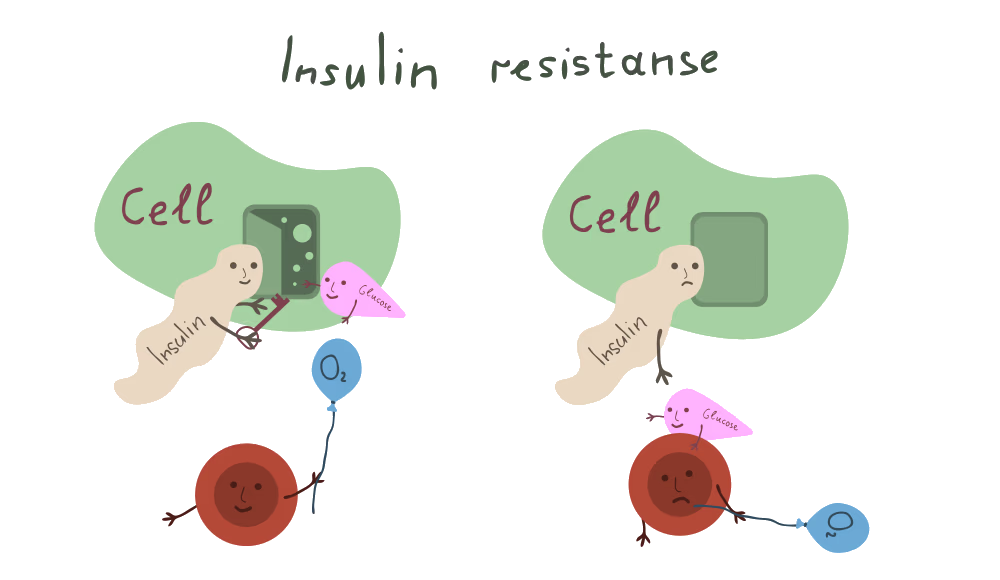
Your cells do something similar with insulin. When insulin levels are constantly high (from eating frequently, consuming lots of refined carbs, or chronic stress), your cells start to “tune out” the signal. They become less responsive—not because something is broken, but because they’re protecting themselves from overstimulation.
This is actually your body being smart! But it creates a vicious cycle: the pancreas pumps out even MORE insulin to get the message through, which makes cells tune out even more.
The Timing Secret Nobody Talks About
Here’s a game-changer: WHEN you eat matters almost as much as WHAT you eat for insulin health.
Every time you eat—even healthy food—insulin spikes. Constant snacking means constant insulin. Your cells never get a break from the signal.
Research shows that giving your body windows of time without food (even just 12-14 hours overnight) allows insulin levels to drop and cells to “reset” their sensitivity. This isn’t about extreme fasting—it’s about not eating from 8pm to 8am, for example.
Also fascinating: eating the SAME meal at different times produces different insulin responses. A 2024 study found that your body handles carbs better earlier in the day when your cells are naturally more insulin-sensitive. That late-night snack? Your body processes it very differently than breakfast.
As the Chinese saying goes: “早上吃饱,中午吃好,晚饭吃少” (Eat fully at breakfast, eat well at lunch, eat lightly at dinner). Turns out, this ancient wisdom is backed by modern science!
Simple hack: Try eating your largest meal earlier in the day and keeping evenings lighter.
The “Food Order” Trick
Here’s a simple trick backed by research: the ORDER you eat your food changes how much insulin your body releases.
Eating vegetables or protein BEFORE carbohydrates can reduce your glucose spike by up to 75% and significantly lower the insulin surge. Why? Fiber and protein slow down how fast carbs hit your bloodstream.
Same total food, same calories, same nutrients—but completely different effect on your insulin just by changing the sequence.
Try this: Start your meal with vegetables or salad → then protein → then carbs/starches last.
Bonus tip: A short 10-minute walk after eating can drop your glucose response by up to 30%. Your muscles act like sponges, soaking up glucose without needing much insulin at all.
Hidden Signs Your Insulin Might Be Too High
Since standard tests often miss high insulin, watch for these clues:
• Stubborn belly fat that won’t budge despite diet and exercise
• Intense sugar cravings or feeling “hangry” between meals
• Energy crashes in the afternoon
• Skin tags or dark patches on neck/armpits (called acanthosis nigricans)
• Difficulty losing weight even when eating “healthy”
• For women: irregular periods or PCOS symptoms
The Bottom Line
Insulin is essential for life—but like most things, balance is everything. The goal isn’t zero insulin; it’s keeping levels in a healthy range so your cells stay responsive.
Small shifts—eating in a shorter window, putting veggies first, moving after meals, choosing whole foods over processed ones—can make a real difference in how your body handles insulin. And the best part? You can start today.
Coming Up Next
Stay tuned for Part 3 of our Diabetes & Metabolic Syndrome Series: “The Complications Nobody Warns You About: How Uncontrolled Blood Sugar Damages Your Body Over Time.” We’ll explore what actually happens to your eyes, kidneys, nerves, and heart when glucose stays elevated—and why catching things early makes all the difference.
If you found this helpful, please follow our official WeChat page or Substack to support free, evidence-based nutrition content! 💚