

After birth, attention shifts to feeding schedules and the baby’s growth. Meanwhile, the mother may be healing, recovering from blood loss, and struggling to find time for lunch.
Recovery deserves nutritional attention whether you breastfeed, combination-feed, or use formula.
Exhaustion is not always just lack of sleep
Blood loss during delivery can worsen iron deficiency that began in pregnancy. Postpartum anemia can contribute to fatigue and affect quality of life.
Discuss disproportionate exhaustion, persistent dizziness, or weakness with your clinician, especially after substantial blood loss. These symptoms can have several causes.
Blood-count testing may be appropriate. Ferritin, a marker of iron stores, can be misleadingly elevated by inflammation during the first several weeks after birth, so test timing and interpretation matter.
Iron-rich foods help support intake, but diagnosed anemia may require prescribed oral or intravenous iron. Food alone is not a substitute for treatment.
If you were prescribed iron during pregnancy, ask about continuing it rather than stopping automatically after delivery.
Do energy needs drop immediately after birth?
For well-nourished breastfeeding mothers, US guidance estimates roughly 330–400 additional calories per day compared with pre-pregnancy intake. Actual needs vary with body size, activity, and whether breastfeeding is exclusive or combined with formula.
Canadian guidance describes this practically: add a small amount of food, such as an extra snack or small meal.
If you are not breastfeeding, that lactation-related increase does not apply. You still need adequate nourishment for recovery. An aggressive calorie deficit is not the priority in the early weeks.
Make meals easier, rather than more elaborate
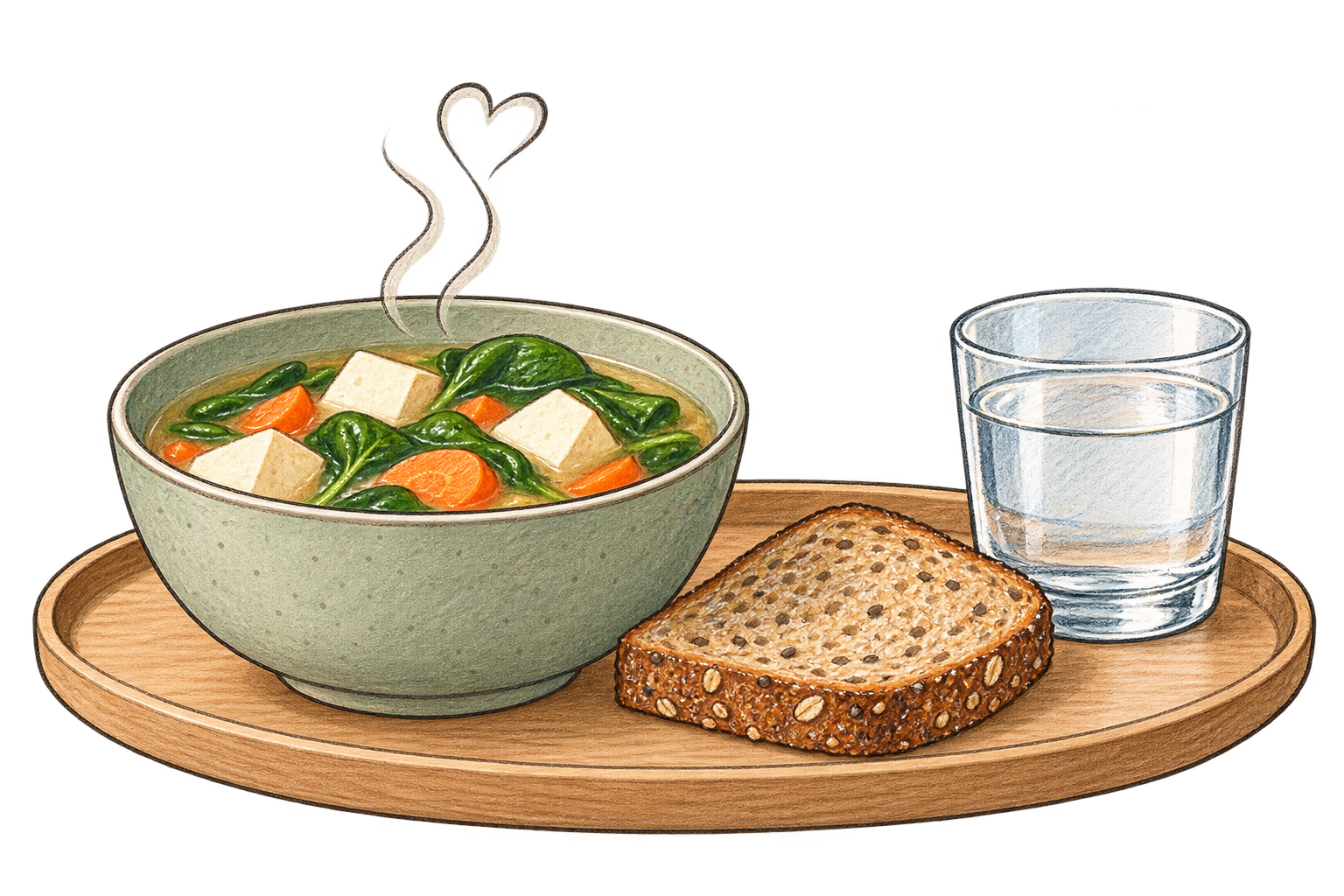
A useful recovery meal combines a protein food, an energy source, and some vegetables or fruit.
That could look like:
Congee with eggs or tofu, plus vegetables.
Lentil soup with whole-grain bread.
Rice with fish or chicken and frozen vegetables.
Yogurt with oats, fruit, and nuts for a quick snack.
For the protein foundations, revisit Protein, Amino Acids and Nutrition Across the Lifespan.
Traditional postpartum soups can fit; include protein foods and other ingredients rather than relying on broth alone.
Frozen vegetables, canned beans, and meals prepared by family are useful options. Convenience can support good nutrition.
Constipation and thirst deserve practical solutions
Constipation can make recovery more uncomfortable. Gradually increasing fiber, drinking enough fluid, and moving as your recovery allows may help. Ask about treatment if symptoms persist.
For food ideas, revisit Beyond the Bulk: Understanding Fiber’s Crucial Role in Health and Weight Management.
Keep water near the place where you feed the baby, and drink when thirsty. There is insufficient evidence that forcing extra fluids beyond your needs increases milk production.
Should you keep taking a prenatal vitamin?
Review it with your clinician or pharmacist.
Canadian guidance recommends a daily multivitamin with 400 micrograms (0.4 mg) of folic acid for anyone who could become pregnant, including during breastfeeding.
Other needs differ from pregnancy. Your iron plan should reflect blood loss, test results, and treatment—not simply the word “postnatal” on a package.
During lactation, iodine and choline deserve attention. A vegetarian or vegan eating pattern also warrants checking vitamin B12 and other potential gaps.
A “milk-boosting” product is not the first step
Lactation cookies, teas, and herbal blends often promise more than their evidence supports.
If you are concerned about milk supply, seek feeding support first. A qualified professional can assess milk transfer, feeding or pumping patterns, and possible medical causes.
Avoid removing multiple foods simply because your baby is unsettled. Most breastfeeding mothers do not need a restrictive diet; suspected allergy or another medical problem deserves proper assessment.
We’ll explore human milk in the next post. Here, the mother’s nourishment deserves attention too.
Recovery needs support, not a deadline
Breastfeeding does not guarantee rapid weight loss. Research on postpartum weight change is variable, and individual experiences differ.
Revisit body-composition goals when you are ready, with support that considers healing and feeding. Eating regularly comes first.
Practical help matters: bringing a meal, washing containers, filling a water bottle, or holding the baby while the mother eats.
Rest and emotional support matter too. Persistent low mood or difficulty coping deserves care beyond nutrition.
Coming up next
We’ve focused on the mother’s nourishment after birth. Next, we’re turning to the science of human milk.
In Part 6 of our Women’s Nutrition & Hormonal Health Across the Lifespan Series, we’ll explore:
Human Milk, Colostrum, and Donor Milk: What the Science Actually Shows
We’ll look at early milk, protective components, donor milk, and the distinct needs of preterm infants. We’ll also draw on Elena’s responses to our questions, alongside independently checked research.
See you in Part 6!
If this post was useful to you, share it with someone who might benefit, and follow our WeChat page or Substack for more evidence-based nutrition made accessible to everyone.