

Welcome back to the series. In Part 3, we explored how uncontrolled blood sugar silently damages your eyes, kidneys, nerves, and heart. Now, let’s rewind to the stage before that damage begins—the stage where you still have full control.
That stage is called prediabetes, and it affects hundreds of millions of people worldwide. Most of them have no idea.
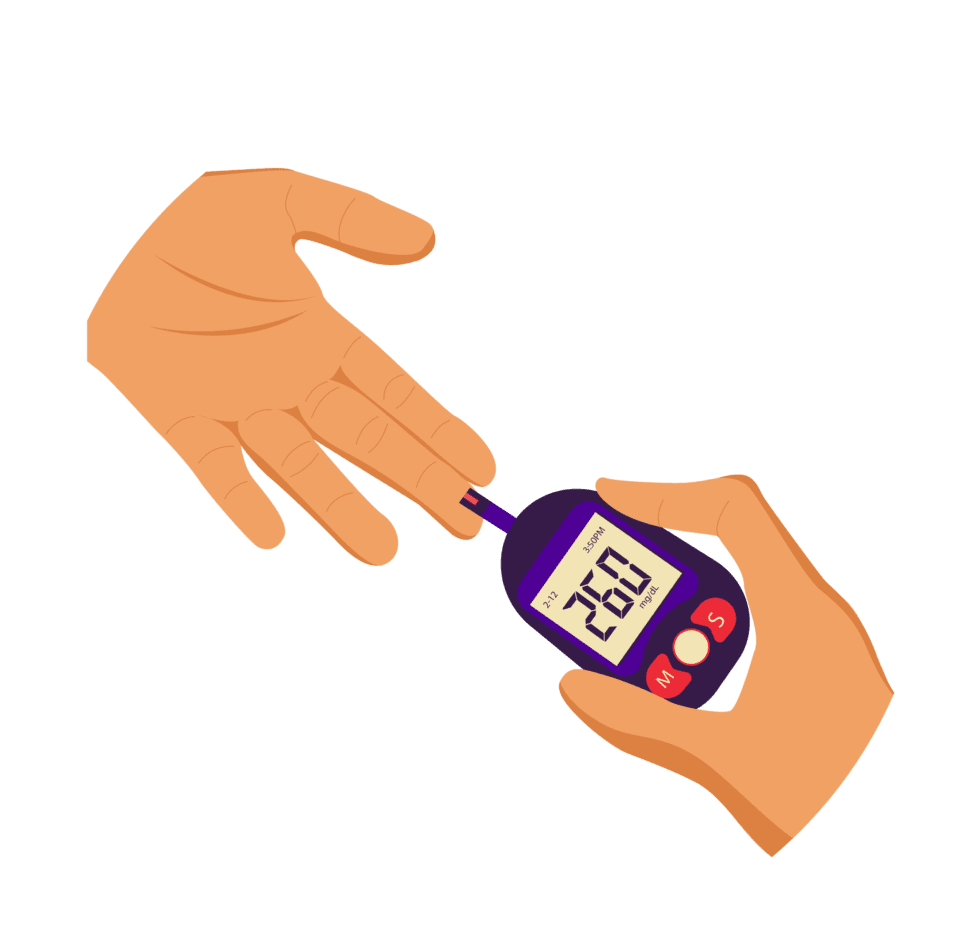
What Is Prediabetes?
Prediabetes is the metabolic “grey zone” between normal blood sugar and type 2 diabetes. Your glucose levels are higher than healthy, but not yet high enough for a diabetes diagnosis. Think of it as your body’s check-engine light—a warning before the engine breaks down.
But don’t let the word “pre” fool you. Prediabetes is a serious condition on its own. Research shows that complications we typically associate with diabetes—retinopathy, neuropathy, kidney disease, cardiovascular disease—can actually begin during this stage (Tabák et al., Lancet, 2012; Hostalek, Clin Diabetes Endocrinol, 2019).
Prediabetes is identified through three tests (as mentioned in the previous post):
Fasting Plasma Glucose (FPG) — no food for 8+ hours
Normal: 70–99 mg/dL (3.9–5.5 mmol/L)
Prediabetes: 100–125 mg/dL (5.6–6.9 mmol/L)
High / Diabetes: ≥126 mg/dL (≥7.0 mmol/L)
Oral Glucose Tolerance Test (OGTT) — 2 hours after 75g glucose drink
Normal: below 140 mg/dL (below 7.8 mmol/L)
Prediabetes: 140-199 mg/dL (7.8-11.0 mmol/L)
High / Diabetes: ≥200+ mg/dL (≥ 11.1+ mmol/L)
HbA1c — average blood sugar over 2–3 months
Normal: Below 5.7%
Prediabetes: 5.7%-6.4%
High / Diabetes: 6.5%+
(American Diabetes Association, Standards of Care, 2024)
These tests measure different things. IFG reflects how your liver manages glucose overnight. IGT reflects how your muscles handle glucose after eating. HbA1c captures your overall glucose exposure. You can test normal on one but prediabetic on another—which is why thorough screening matters.
The Global Picture
The scale of this problem is enormous.
According to the IDF Diabetes Atlas (11th edition, 2025) and a 2025 update in Diabetes Care (Rooney et al.), the global prevalence of impaired glucose tolerance rose from 9.1% to 12.0% between 2021 and 2024, and impaired fasting glucose rose from 5.8% to 9.2%. Both are projected to keep climbing through 2050.
In the United States, the CDC (January 2026) estimates 115.2 million adults have prediabetes—roughly 1 in 3. Over 80% don’t know they have it.
In China, as we’ve discussed in earlier posts, prediabetes prevalence has reached 35–38% of the adult population—an estimated 388 million people (Wang et al., JAMA, 2017; Tian et al., Diabetes Care, 2024). Nearly half of all Chinese adults have either diabetes or prediabetes.
These are not just statistics. These are our parents, siblings, friends, and colleagues—walking around with a warning they can’t see.
The Damage Starts Earlier Than You Think
Many people assume the real danger only begins once you cross the diabetes threshold. That assumption is wrong.
A 2020 meta-analysis in the BMJ (Cai et al.), pooling 129 studies with over 10 million individuals, found that prediabetes in the general population was associated with:
13% higher risk of death from any cause
15% higher risk of cardiovascular disease
16% higher risk of coronary heart disease
14% higher risk of stroke
Among patients with existing heart disease, the risks were even steeper—36% higher mortality and 37% higher cardiovascular events.
UK Biobank data further showed that people with prediabetes had double the risk of developing atherosclerotic cardiovascular disease, chronic kidney disease, and heart failure—before they ever progressed to diabetes. Over 58% of asymptomatic adults with prediabetes already had coronary artery disease visible on cardiac imaging (Echouffo-Tcheugui et al., J Am Coll Cardiol, 2024).
Remember the AGEs (”sugar rust”) we discussed in Part 3? That damage doesn’t wait for a diabetes diagnosis. It begins on a continuum, and prediabetes is already on it.
What Happens If You Do Nothing?
Without intervention, the trajectory is clear:
5–10% of people with prediabetes progress to type 2 diabetes each year (Lancet Diabetes Endocrinol, 2025)
~25% develop diabetes within 3–5 years (Tabák et al., Lancet, 2012)
Up to 70% will eventually develop diabetes in their lifetime (Hostalek, 2019)
The prediabetes phase typically lasts 8.5–10.3 years before progressing (Dagogo-Jack, Endocr Pract, 2020)
That’s a long window. And every day within it is a chance to change direction.
The Good News: Prediabetes Is Reversible
This is the most important section of this entire post.
The Diabetes Prevention Program (DPP)—a landmark NIH trial of 3,234 adults with prediabetes across 27 U.S. centers—produced results so powerful that the study was stopped early (Knowler et al., N Engl J Med, 2002).
The findings:
An intensive lifestyle program (7% body weight loss + 150 minutes/week of moderate activity) reduced diabetes risk by 58%.
For adults aged 60+, the reduction was 71%.
Metformin reduced risk by 31%—effective, but lifestyle changes were nearly twice as powerful.
Nothing extreme was required. No crash diets. No marathon training. For someone weighing 90 kg (200 lbs), 7% means losing just 6 kg (14 lbs).
The DPPOS follow-up study tracked participants for over 22 years (Nathan et al., Diabetes Care, 2025). Results:
The lifestyle group maintained a 25% reduced diabetes risk 22 years later.
Participants who never developed diabetes had 57% less retinopathy, 37% less kidney disease, and 39% fewer heart attacks and strokes.
Most remarkably, a 2025 analysis from the DPPOS and China’s Da Qing study (Lancet Diabetes Endocrinol, Schlesinger et al.) showed that people who reversed their prediabetes back to normal glucose levels cut their risk of cardiovascular death or heart failure hospitalization by half.
Reversing prediabetes didn’t just prevent diabetes—it cut the risk of dying from heart disease by 50%.
Your Action Plan
Get tested. Ask your doctor for fasting glucose, OGTT, or HbA1c. The ADA recommends screening all adults from age 35, or earlier with risk factors. As we’ve noted in previous posts, Asian populations often develop metabolic complications at lower BMI, so a “normal” weight doesn’t guarantee safety.
Lose 5–7% of body weight if you’re carrying extra weight. This was the single strongest predictor of diabetes prevention in the DPP.
Move 150 minutes per week. Brisk walking counts. Walking after meals, taking stairs—it all adds up.
Eat whole, minimally processed foods. More fiber from vegetables, legumes, and whole grains. Less refined carbohydrates and sugary drinks. As we’ve covered in earlier NutriNom posts, balanced macronutrients—including adequate protein—help regulate blood sugar and keep you full.
Prioritize sleep and manage stress. Both directly impair insulin sensitivity—an often overlooked but critical factor.
Discuss metformin with your doctor if you’re at very high risk (BMI ≥ 35, age under 60, or history of gestational diabetes).
The Bottom Line
Prediabetes is not a death sentence. It’s a wake-up call—and one of the most reversible conditions in medicine. With modest, sustained lifestyle changes, you can dramatically lower your risk of type 2 diabetes, prevent the complications we discussed in Part 3, and even cut your risk of heart disease in half.
The window is open. Don’t wait for symptoms. Don’t wait until your numbers cross the line. Act now, while the choice is still yours.
Coming Up Next
Stay tuned for Part 5 of our Diabetes & Metabolic Syndrome Series: "Eating to Beat Diabetes: The Science of What Actually Works." We'll break down which dietary patterns have the strongest evidence for preventing and managing type 2 diabetes—and how to make them work in your everyday meals.
If you found this helpful, please follow our WeChat page or Substack to support evidence-based nutrition content that’s accessible to everyone! 💚