

In Part 3, we looked at what uncontrolled blood sugar can do to the eyes, kidneys, nerves, and heart.
We left out one organ: the liver.
Not because it matters less, but because fatty liver disease is so closely tied to insulin resistance that it deserves its own discussion.
And despite how common it is, it often goes unnoticed.
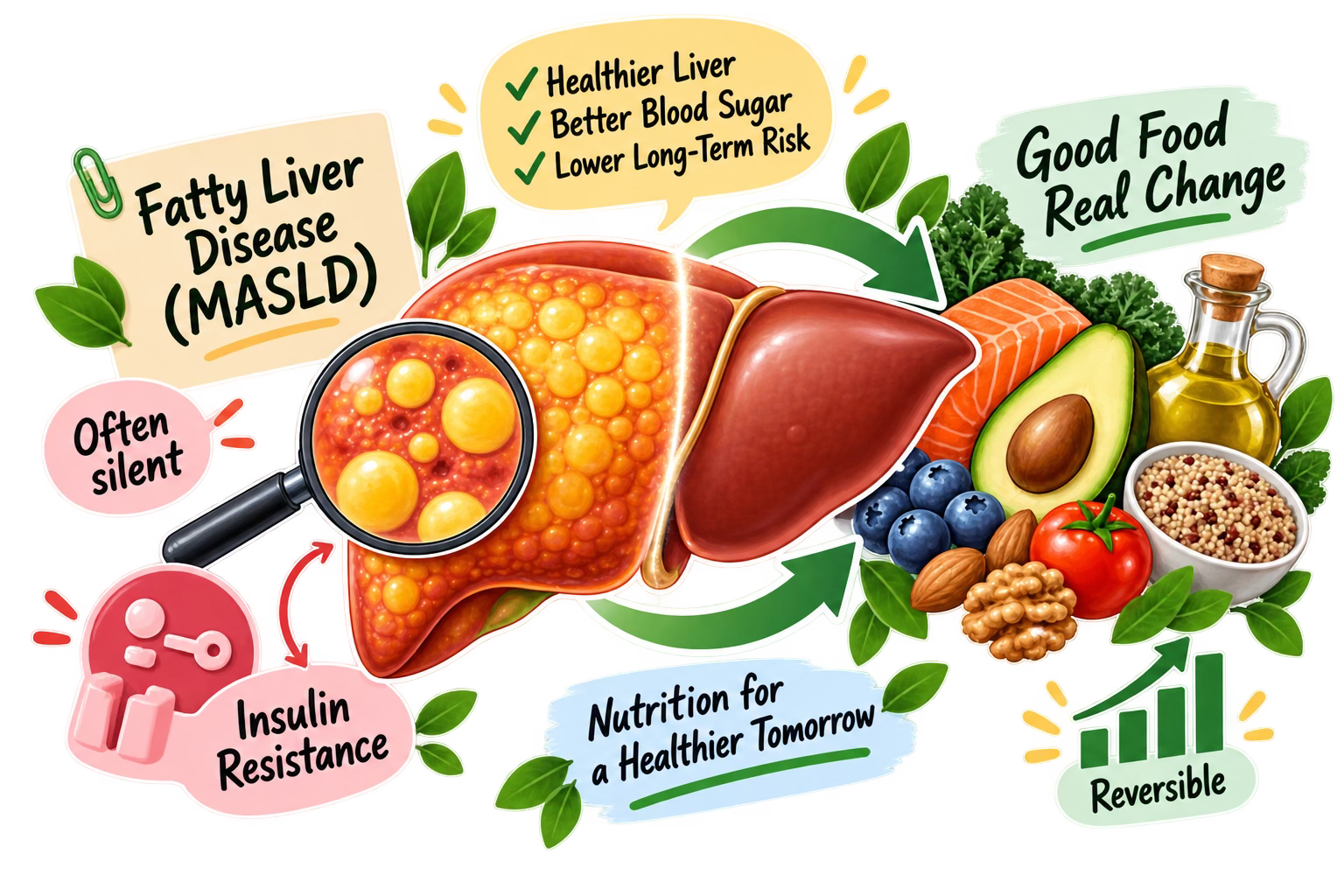
A Condition That Changed Its Name
You may know it as NAFLD — non-alcoholic fatty liver disease. In 2023, an international consensus renamed it MASLD: metabolic dysfunction-associated steatotic liver disease.
The change reflects what drives the disease: fat accumulation in the liver alongside metabolic risk factors such as insulin resistance, diabetes, abnormal blood lipids, or excess abdominal fat.
MASLD can progress from simple fat accumulation to inflammation and liver cell injury (MASH), then fibrosis, cirrhosis, and eventually liver cancer.
How Common Is It?
Roughly one in three adults worldwide has fatty liver disease. A major global analysis estimated prevalence at about 30%, with rates rising substantially over recent decades.
China is no exception. In a recent population-based study of 9,013 adults in Foshan, researchers found:
38.97% had liver steatosis
36.69% met criteria for MASLD
2.55% already had advanced fibrosis
Diabetes and other cardiometabolic risk factors were associated with more severe liver disease.
Importantly, fatty liver is not limited to people with obesity. Body size alone cannot tell you whether someone has unhealthy liver fat.
Why the Liver Matters for Blood Sugar
One of insulin’s jobs is to tell the liver to reduce glucose production after you eat.
When the liver becomes insulin resistant, that signal becomes less effective. The liver continues releasing glucose into the bloodstream when it isn’t needed, contributing to the elevated fasting glucose seen in prediabetes and type 2 diabetes.
At the same time, excess fat can accumulate inside liver cells. Liver fat and insulin resistance then reinforce each other.
This helps explain why MASLD and type 2 diabetes occur together so frequently.
It also connects back to the diabetes-remission research from Part 6. In the DiRECT mechanistic study, weight loss produced a large reduction in liver fat, while recovery of pancreatic beta-cell function distinguished people who achieved remission from those who did not.
Why It Gets Missed
MASLD usually causes no obvious symptoms in its early stages. There may be no pain or visible warning signs, and liver enzymes can remain normal even when clinically important disease is present.
That is why relying only on routine liver enzymes can miss people at risk.
The 2026 American Diabetes Association Standards now recommend assessing adults with type 2 diabetes or prediabetes for liver fibrosis risk using FIB-4, even when liver enzymes are normal. FIB-4 uses age, AST, ALT, and platelet count to estimate fibrosis risk.
If you have diabetes, prediabetes, obesity, high triglycerides, or other metabolic risk factors, it may be worth asking your healthcare provider whether liver assessment is appropriate.
The Good News: The Liver Responds to Lifestyle Change
For most people with early MASLD, lifestyle change remains the foundation of treatment.
Weight loss
For adults with overweight and MASLD, European guidelines recommend sustained weight loss of approximately:
≥5% to reduce liver fat
7–10% to improve liver inflammation
≥10% to improve fibrosis
The greater the sustained weight loss, the greater the potential improvement.
What you eat matters too
Guidelines recommend a Mediterranean-style eating pattern emphasizing vegetables, legumes, whole grains, fish, nuts, and unsaturated fats while limiting ultra-processed foods, added sugars, and saturated fat.
Sugar-sweetened beverages are an especially useful target. For people with diabetes or prediabetes, the 2026 ADA Standards recommend replacing sugar-sweetened beverages — including juices — with water or low/no-calorie alternatives. Whole fruit remains different because it comes packaged with fiber and intact plant structure.
Alcohol still matters
MASLD is metabolic, but alcohol can add further liver injury. Current European guidance discourages alcohol consumption in people with steatotic liver disease, particularly at moderate or high intakes, and recommends complete abstinence in advanced fibrosis or cirrhosis.
Practical Steps
Know your risk. Diabetes, prediabetes, abdominal obesity, high triglycerides, and other metabolic risk factors increase the likelihood of MASLD.
Cut back on liquid sugar. Soda, sweetened tea and coffee, juice, and other sugary drinks are an easy place to start.
Aim for sustainable weight loss if needed. Even a 5% reduction can meaningfully reduce liver fat.
Choose minimally processed foods. Think vegetables, legumes, whole grains, fish, nuts, seeds, and unsaturated fats.
Move regularly. Exercise can reduce liver fat even without significant weight loss.
The Bottom Line
Fatty liver disease affects roughly one in three adults and is deeply intertwined with insulin resistance and type 2 diabetes.
Yet it can remain silent for years.
The encouraging part is that liver fat is also highly responsive to metabolic change, particularly in earlier disease. Improving diet, reducing excess weight when appropriate, and staying physically active can substantially reduce liver fat and improve metabolic health.
Coming Up Next
Stay tuned for Part 9: “It’s Not Just What You Eat: Meal Order, Cooking Methods, and Blood Sugar.”
Eating the same foods in a different order can change your post-meal glucose response — and how you cook those foods may matter too.
If you found this helpful, please follow our WeChat page or Substack to support evidence-based nutrition content that’s accessible to everyone! 💚